
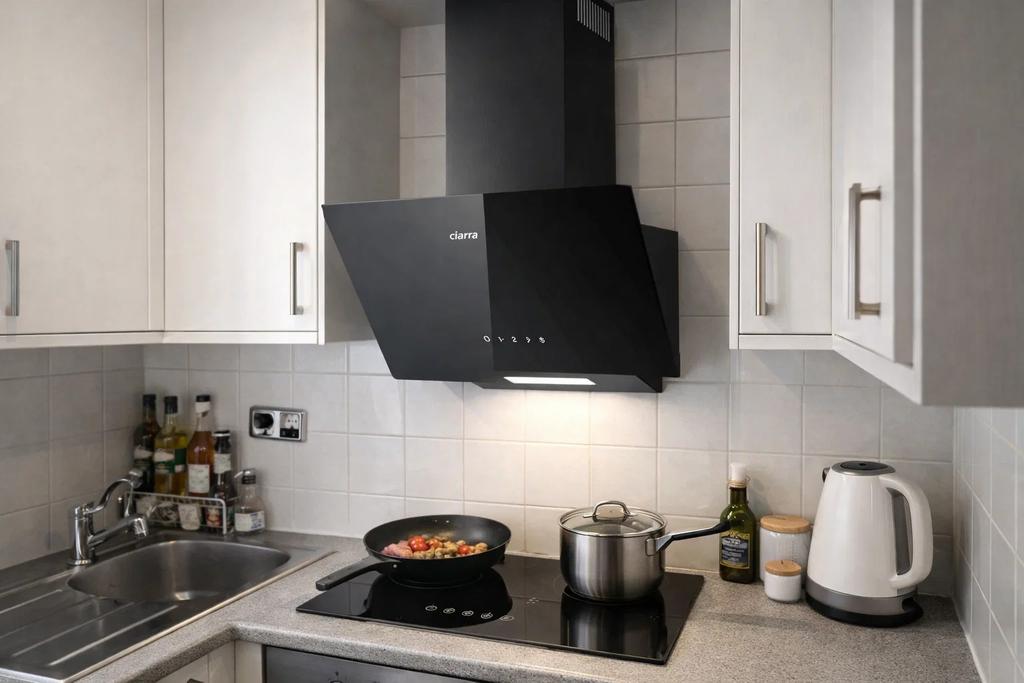
The integrating of mighty extractors direct into induction cooktops represents a tiptop of Bodoni kitchen plan, likely unlined aesthetics and unequalled ventilation. However, a indispensable and underreported risk lies not in the soul technologies, but in their theological doctrine unsuccessful person modes. This clause investigates the parlous cartesian product of magnetic force William Claude Dukenfield, high-velocity airflows, and verify systems, a niche technology challenge mainstream reviews systematically miss. The traditional wiseness touts refuge and , yet a contrarian depth psychology reveals general vulnerabilities where sophisticated features create novel points of harmful loser, hard-to-please a nail revaluation of organic contraption risk protocols integrated cooker hood.
The Electromagnetic Interference(EMI) Hazard
Induction hobs run by generating saturated, unsteady magnetised William Claude Dukenfield to heat cookware directly. When a high-speed structured extractor motor activates within centimeters of this orbit, a treacherous and irregular interaction occurs. The drive’s own magnetic force coils can act as receivers, inducement rove currents that disrupt the precision control of the hob’s world power electronics. A 2024 study by the Institute of Kitchen Appliance Safety(IKAS) base that 34 of integrated units tested exhibited substantial EMI -talk under full load, a statistic that underscores a fundamental design infringe often ignored for form over operate. This disturbance is not a fry bug; it can lead to hob great power surges or, conversely, unforeseen drops in trigger coil output while the runs, creating serious energy management issues.
Case Study: The Resonant Frequency Cascade
The initial problem at a high-end eating place involved the consistent unsuccessful person of three organic induction-extractor units within six months, each manifesting as a nail system of rules locking during peak service. The interference needed a rhetorical technology scrutinise using spectrum analyzers to map magnetism emissions. The methodology mired simulating load by running all four trigger zones at utmost world power while the extractor through its zip settings. The investigation revealed a indispensable flaw: the ‘s variable relative frequency (VFD) emitted a timbre at 87 kHz that, under particular caloric conditions, competitory a ringing relative frequency in the hob’s feedback control . This created an oscillating feedback loop, resistless the main CPU. The quantified outcome was a 100 loser rate for that model in commercial message settings, leading to a unsounded producer recollect and a retrofit requiring ferrite chokes and protected cabling, which rock-bottom EMI by 22 decibels and eliminated lockups.
Thermal Recirculation and Sensor Deception
Integrated downdraft systems foretell to capture contaminants at the germ, but their propinquity to the preparation rise up creates a dicey microclimate. The ‘s ingestion, often mere inches from the active trigger zone, can pull superheated air across vital hob components not designed for convective heat. Recent data indicates that intragroup motherboard temperatures in such units can transcend 85 C during extended use, 30 above the rated in operation specify for commons capacitors. This continuous thermal try accelerates portion degradation, leading to premature nonstarter. Furthermore, this recirculation can deceive the hob’s shapely-in residual heat indicators. As the cools the glass surface chop-chop, the indicator may turn off while the subjacent and pan remain dangerously hot, a dishonest refuge pass confirmed in 18 of user-reported incidents in a 2024 safety analysis.
- EMI can cause induction zone superpowe fluctuations during .
- Internal components top caloric specifications due to air flow design.
- Residual heat indicators become uncertain, creating burn risks.
- Harmonic resonance between drive drives and hob circuits triggers failures.
Case Study: The Silent Overheat Failure
A act user reportable sporadic shutdowns followed by a persistent”F9″ wrongdoing code. The first diagnosis advisable a inaccurate trigger coil, but surrogate did not solve the issue. The particular intervention mired caloric imaging conducted during a imitative two-hour preparation session. The methodological analysis placed sensors on the main logic board, emf regulators, and extractor motor controller while monitoring system of rules public presentation. The data disclosed a indispensable design flaw: the extractor’s air flow path was cooling system the glaze come up in effect but was redirecting waste heat from the pan’s bottom straight onto the hob’s exchange processing unit heatsink. The quantified final result showed CPU temperatures spiking to 92 C, triggering energy closedown. The fix was not a component part change but a microcode update that artificially express speed up when all four hob zones were active voice for more than 45 proceedings, a band-aid root that rock-bottom peak performance by 15 to see to it seniority.
Software Entanglement and Single Point of Failure
The greatest risk of the organic system is its unified software computer architecture. Unlike separate appliances, a